
ACECRAFT: Sky Hero
Skystone Games Pte. Ltd.Action
4.67.66K Reviews
- Version
- 13.1.33.3651
- Installs
- 500.00K
- Age Rating
- Everyone
Screenshots
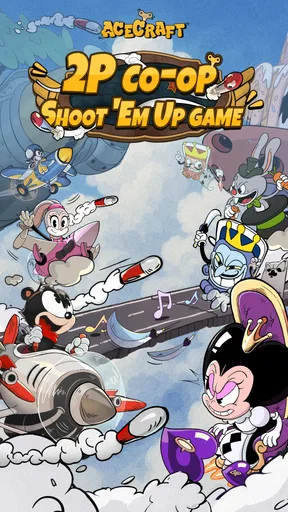
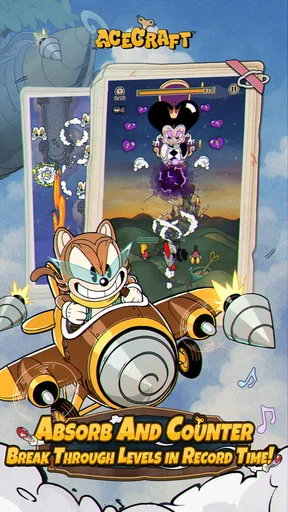
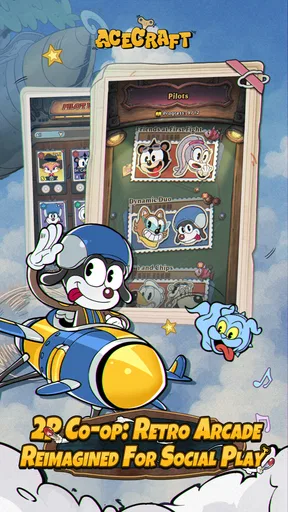
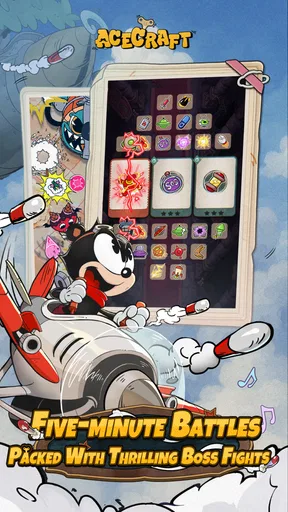
Our Review of ACECRAFT: Sky Hero
 Analysis by Appyee
ACECRAFT: Sky Hero caught my attention because it tries to make a usually solo arcade format feel more social. It is an action game from Skystone Games Pte. Ltd., built around two-player cooperative shooting rather than simply asking one person to chase a higher score. That distinction matters: the first few sessions feel less like repeating a familiar arcade routine and more like learning how to share the screen, the pressure, and the responsibility for surviving.
I spent my early time with it looking for the point beyond the novelty. A cooperative mode can be exciting for an evening, but it needs enough clarity, challenge, and replay value to earn a regular place on a phone. My overall impression is positive, with an important qualification: this is at its best when you already have someone willing to play with you. If you prefer a quiet solo experience, or dislike games that may ask for repeated attempts before they feel comfortable, its appeal is narrower.
Why the first sessions feel different
The strongest first-week appeal is the shared rhythm. In a conventional shoot 'em up, every mistake belongs to you and every successful maneuver is a personal achievement. Here, the cooperative premise changes the conversation. You naturally start calling out danger, deciding who should take a risk, and noticing how your partner reacts under pressure. Even without turning the game into a formal team exercise, those small decisions give each run a personal story.
That makes it particularly suitable for a short session with a friend or family member. I can imagine playing after dinner, handing over a phone or arranging a quick session, then comparing which parts felt manageable and which caused trouble. The Everyone age rating also makes it easier to consider for mixed-age households, although the practical enjoyment still depends on both players being comfortable with fast action and shared responsibility.
The game’s identity is easy to understand. It is not presenting itself as a slow strategy title or a long narrative adventure; it belongs firmly to the action category, and its central attraction is shooting together. That focus is useful because you can understand the basic invitation quickly: join another player, coordinate, and try to get farther. I did not need a lengthy explanation to see why the format could work.
There is also a welcome difference between cooperative play and simply competing on a leaderboard. A score comparison can motivate me for a while, but it does not create the same reason to return with another person. ACECRAFT: Sky Hero has a better chance of becoming a shared habit because the conversation continues outside the game: “Can we handle that section now?” or “Let’s try again with a different approach.” That social loop is a genuine strength, not just a decorative feature.
Still, I would not mistake the first burst of excitement for proof of lasting value. New cooperative games often feel unusually fresh because players are learning the controls and discovering how much communication helps. Once those discoveries are finished, the game has to provide satisfying reasons to repeat its core activity. That is where my opinion becomes more measured.
Who will enjoy the opening week most
I would recommend the opening week to players who already enjoy arcade shooters, quick action sessions, and games that reward coordination. It is also a good fit for someone searching for a lightweight activity to share rather than a large role-playing game that demands a long commitment. The cooperative angle gives a familiar genre a different social texture.
On the other hand, I would be cautious if you normally play on your own. The central idea is less compelling when the cooperative relationship is missing, and the action may feel repetitive if shooting is not already one of your favorite formats. Someone looking for deep character development, a substantial story, or a slow progression system should probably choose a different kind of game.
One practical tip helped me enjoy it more: treat the first sessions as coordination practice instead of judging every attempt by how far you progress. The useful information is often in the mistakes. Notice whether both players are reacting to the same threat, whether one person is taking too many risks, and whether communication becomes clearer on the next attempt. That mindset turns early failure into something constructive rather than frustrating.
Playing together requires more than simply joining
The two-player structure creates a trade-off that is easy to overlook. Cooperation can make difficult moments feel fairer, but it can also expose differences in experience. A confident player may move too quickly, while a newcomer may need time to understand what is happening. If one person treats every run as a performance test, the other may stop enjoying the session.
For that reason, I think the best partner is not necessarily the most skilled one. A patient friend who communicates clearly can make the game more enjoyable than an expert who expects perfect reactions. Short sessions also work better than forcing a long play period after concentration has faded. This is one of those games where the quality of the partnership affects the experience almost as much as the action itself.
What remains after the novelty fades
Month-to-month value is harder to judge from the initial concept alone. The cooperative hook gives players a reason to return, but recurring value depends on whether each session still feels purposeful. I found the strongest long-term argument in the possibility of improving as a pair. You are not only trying to react faster; you are learning when to support each other, when to stay conservative, and when a risky attempt is worth making.
That kind of improvement can be satisfying because it is visible in conversation. A run that once felt chaotic may become readable after repeated practice. You begin to recognize patterns in your own behavior: rushing when nervous, missing an opening while focused elsewhere, or assuming your partner will handle a threat. The game can therefore develop a small but meaningful skill loop, especially for players who enjoy mastering timing rather than collecting a large amount of content.
However, the value is dependent on the people around you. A game that is easy to return to alone has a built-in maintenance advantage: you can play whenever you have a few minutes. A two-player experience asks for availability, and that makes the habit more fragile. If your usual partner becomes busy, the game may remain installed but unused. This is the biggest question I would ask before downloading it: do I have someone with whom I will realistically play more than once?
The public response suggests that many players have found the concept appealing. The game holds an average rating of 4.6 from around 37 thousand ratings, with more than 500 thousand installs. Those figures indicate meaningful interest, but they do not remove the personal test of whether the cooperative loop fits your routine. Popularity can tell me that the idea connects with a broad audience; it cannot guarantee that my own play group will stay engaged.
Another useful way to think about recurring value is session purpose. If I open the game only because I feel I should maintain progress, it can quickly become a chore. If I open it because a friend is available and we have a specific goal for the session, the same mechanics feel more rewarding. I would avoid treating it like a daily obligation unless the game naturally fits your schedule.
Small habits that improve repeat sessions
My preferred routine would be to agree on a modest objective before starting: practice a difficult stretch, improve communication, or simply complete a relaxed run without blaming mistakes. This keeps the session from becoming an endless sequence of retries. It also gives a less experienced player a clear role in the improvement process.
I would also recommend changing partners occasionally if that is practical. Playing with the same person can create excellent teamwork, but it can also hide weaknesses because both players become accustomed to one another’s habits. A different partner reveals whether your coordination is genuinely adaptable or only comfortable in one familiar pairing. That is a more useful test than chasing a single impressive session.
For players who spend money in free games, restraint is especially important. ACECRAFT: Sky Hero is free to play, with in-app purchases ranging from $0.99 to $99.99 per item. I would first decide whether the basic cooperative loop has become part of my routine before considering any purchase. A paid item cannot solve the central problem of an unavailable partner, and it should not be used to force interest after the first-week excitement has disappeared.
The current version is 13.1.33.3651, and the game runs on Android 8.0 or later. Those details matter when deciding whether it fits an older device, but they do not tell me how smoothly every phone will handle it. I would install it on the device I actually plan to use and judge responsiveness during real cooperative play, because fast action leaves less room for a screen or control setup that feels uncomfortable.
Where the maintenance burden appears
The maintenance burden is not only technical. It is also social and mental. Technically, a free action game with cooperative ambitions needs enough room in my routine for updates, sessions, and the occasional period when my partner is unavailable. Socially, I have to keep the game in the conversation. If neither player suggests returning, the installation alone will not create a habit.
There is a subtle scheduling issue here. A solo shooter can fill an unexpected gap immediately, while a cooperative game may require arranging a time. That makes ACECRAFT: Sky Hero more rewarding for planned sessions and less convenient as an emergency time-killer. If I have ten spare minutes while waiting somewhere, I may prefer a game designed around independent play. If I have a friend ready to join, this title becomes much more attractive.
The game also asks for a certain amount of emotional maintenance. Cooperative mistakes can be funny, but repeated failures can become tense when players interpret them as someone else’s fault. I found that the best long-term approach is to discuss decisions rather than blame outcomes. “Let’s stay closer next time” is useful; “you ruined the run” is not. This sounds obvious, yet it can determine whether the game remains a shared hobby or quietly disappears.
For families, the Everyone rating is reassuring as a broad age classification, but I would still play alongside younger users at first. Fast action can be overwhelming even when the content is suitable, and a cooperative format works best when both players understand that the goal is teamwork rather than pressure. That is a recommendation about play style, not a criticism of the rating.
What may cause fatigue over repeated play
The first source of fatigue is repetition in the central action. Shooting, dodging, and trying again can be satisfying for players who enjoy refinement, but less appealing to anyone who needs constant changes in objectives. If your enjoyment comes mainly from discovering new story chapters or building a large collection, the focused format may begin to feel narrow.
The second is uneven participation. A two-player game can become exhausting when one person carries the session while the other feels lost. The stronger player may enjoy the challenge less, and the newer player may feel like an obstacle. I would solve this by alternating who sets the pace and by accepting slower attempts as part of the learning process.
The third is purchase pressure. The presence of optional items priced from $0.99 to $99.99 means I would keep an eye on spending, particularly if the game becomes a frequent shared activity. Free entry is a real advantage, but it can also make small purchases feel harmless until they accumulate. My advice is simple: set a limit before playing regularly and do not buy merely because a difficult session was frustrating.
There is also the fatigue that comes from depending on novelty. The two-player pitch is memorable, but a concept alone cannot carry every session forever. When the excitement settles, the game has to be enjoyable in the ordinary moments: a quick attempt that goes better than last time, a funny mistake, or a satisfying piece of coordination. If those quieter rewards are absent for you, the game may be better as an occasional visit than a permanent favorite.
This is where it compares interestingly with usual alternatives in the action category. A typical solo shoot 'em up offers more convenience and lets me control the pace without negotiating with another person. A competitive action game may provide a stronger long-term ranking chase, while a story-led action title offers more variety between encounters. ACECRAFT: Sky Hero’s advantage is narrower but distinctive: it makes cooperation the reason to play, not merely an extra mode attached to a solo design.
That advantage is meaningful when I want a shared activity, but it is not universal. If I value immediate access, deep solo progression, or a broad range of objectives above teamwork, an alternative will probably serve me better. I would choose this game for the relationship around the session, not because it replaces every other kind of action game.
My long-term verdict
After the first-week appeal fades, ACECRAFT: Sky Hero earns its space only when cooperative play is part of my real routine. Its best quality is the way it turns familiar action into a conversation between two people. The game encourages communication, shared learning, and the kind of small improvements that feel more memorable when someone else notices them too.
Its limitations are equally clear. The format depends heavily on finding a willing partner, and repeated action may feel focused rather than expansive. Players who want a rich solo game, a large narrative, or constant variety should not download it expecting the cooperative idea to solve those preferences. The free price removes the biggest barrier to trying it, but it does not remove the need for time, patience, and compatible company.
Skystone Games Pte. Ltd. has chosen a clear direction, and I prefer that clarity to a game that tries to serve every audience at once. The 4.6 average and broad install base show that the approach has connected with many players, while the thousands of written reviews suggest an active audience around it. I would still make my decision based on my own habits rather than those numbers.
My recommendation is to try it with a specific partner and a realistic plan for several short sessions. Do not judge it only by the first burst of excitement, and do not buy anything until the basic teamwork has proved enjoyable. If you and another player like improving together, this can become a welcome recurring action game. If you usually play alone or need constant new content, it is more likely to remain a brief experiment.
In the end, ACECRAFT: Sky Hero does not earn lasting space simply because it is free or because cooperative shooting sounds fresh. It earns that space when two people keep finding reasons to come back: to communicate better, recover from a mistake, and enjoy a run that feels shared rather than merely completed. For the right pair, that is a strong and practical reason to keep it installed.
Verdict
Strengths of ACECRAFT: Sky Hero
- Simple controls make the game easy to pick up on mobile.
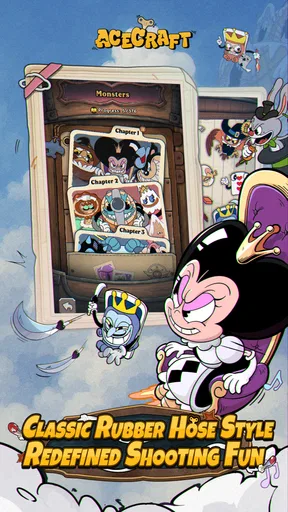
- Bright cartoon visuals give each stage a lively personality.
- Short missions fit well into quick gaming sessions.
- Frequent upgrades create a satisfying sense of progression.
- Different aircraft and heroes add variety to combat.
Limitations of ACECRAFT: Sky Hero
- Energy limits may interrupt longer play sessions.
- Later stages can feel heavily dependent on upgraded gear.
- Random rewards may make specific equipment difficult to obtain.
- On-screen effects can become visually busy during intense fights.
- Some menus and features take time to unlock.
Other Releases by Skystone Games Pte. Ltd.
View All
Crystal of Atlan
Action4.3

Mobile Legends: Bang Bang.US
Action3.5

Watcher of Realms - US
Role Playing4.5

Mobile Legends: Adventure-idle
Role Playing4.0
Similar Picks in This Category
View All
Temple Run 2: Endless Escape
Imangi Studios4.1

PUBG MOBILE
Level Infinite4.3

Free Fire: 9th Anniversary
GARENA INTERNATIONAL I4.4

Talking Tom: Hero Dash Run
Outfit7 Limited4.3

slither.io
Lowtech Studios3.9

Sniper 3D:Gun Shooting Games
Wildlife Studios4.6
Frequently Asked Questions
What is ACECRAFT: Sky Hero?
ACECRAFT: Sky Hero is a colorful, arcade-style mobile shooter focused on aerial combat. Players control a cartoon aircraft, fly through enemy-filled stages, collect power-ups, defeat bosses, and improve their pilot and plane over time. Its presentation is lighthearted and accessible, but the gameplay still requires quick reflexes, movement control, and sensible use of special abilities during crowded battles.
Is ACECRAFT: Sky Hero free to download and play?
ACECRAFT: Sky Hero can generally be downloaded and played without an upfront purchase, although the experience may include optional in-app purchases. These purchases can help with upgrades, resources, or progression, but players who prefer not to spend money can usually continue by completing missions and collecting rewards. Check the store listing for the latest pricing, payment options, and regional availability.
Does the game require an internet connection?
An internet connection may be needed for several important features, including account synchronization, events, advertisements, updates, rewards, and in-app purchases. Some basic gameplay may work in limited offline situations, but this should not be assumed for every mode. For the smoothest experience, especially when accessing online content or saving progress, use a stable Wi-Fi or mobile-data connection.
Is ACECRAFT: Sky Hero suitable for beginners?
The game is relatively friendly to newcomers because its colorful art style, straightforward controls, and early missions make the basic mechanics easy to understand. However, later stages can become noticeably more demanding, with denser enemy patterns, stronger bosses, and greater upgrade requirements. Beginners should learn to move continuously, avoid unnecessary damage, and spend resources carefully rather than upgrading randomly.
What devices are recommended for playing ACECRAFT: Sky Hero?
ACECRAFT: Sky Hero should run on many modern Android and iOS devices, but performance can vary depending on the phone or tablet, operating-system version, available storage, and background activity. A reasonably recent device with free space and updated software is recommended for smoother animations and shorter loading times. Before downloading, review the official store requirements and confirm that your device is supported.
Play our best games!


